Solvent distiller installation: what are the mistakes to avoid?
Installing a solvent distiller is a strategic choice to optimize costs, reduce waste and improve the sustainability of production processes.
However, an incorrect installation can compromise not only the performance of the system, but also operational safety.
For this reason, it is essential to understand the most common mistakes e and prevent them right from the design and commissioning stage.
Why is installation a critical phase?
A distiller works with often flammable solvents, high temperatures and delicate processes that require controlled conditions. A poor installation can result in reduced distillation efficiency, increased energy consumption and premature wear of components. With direct consequences on operator safety as well. This is precisely why every detail during installation makes the difference.
During installation, it will be crucial to carefully follow the instructions provided by the distiller manufacturer. These instructions will include details on how to correctly position the distiller, how to connect electrical cables and inlet/outlet pipes, as well as any commissioning procedures.
Mistakes to avoid:
1. Where should a solvent distiller be positioned?
One of the most frequent mistakes concerns the choice of space in which to install the distiller.
The system must be placed in an area that is:
- adequately ventilated (and covered)
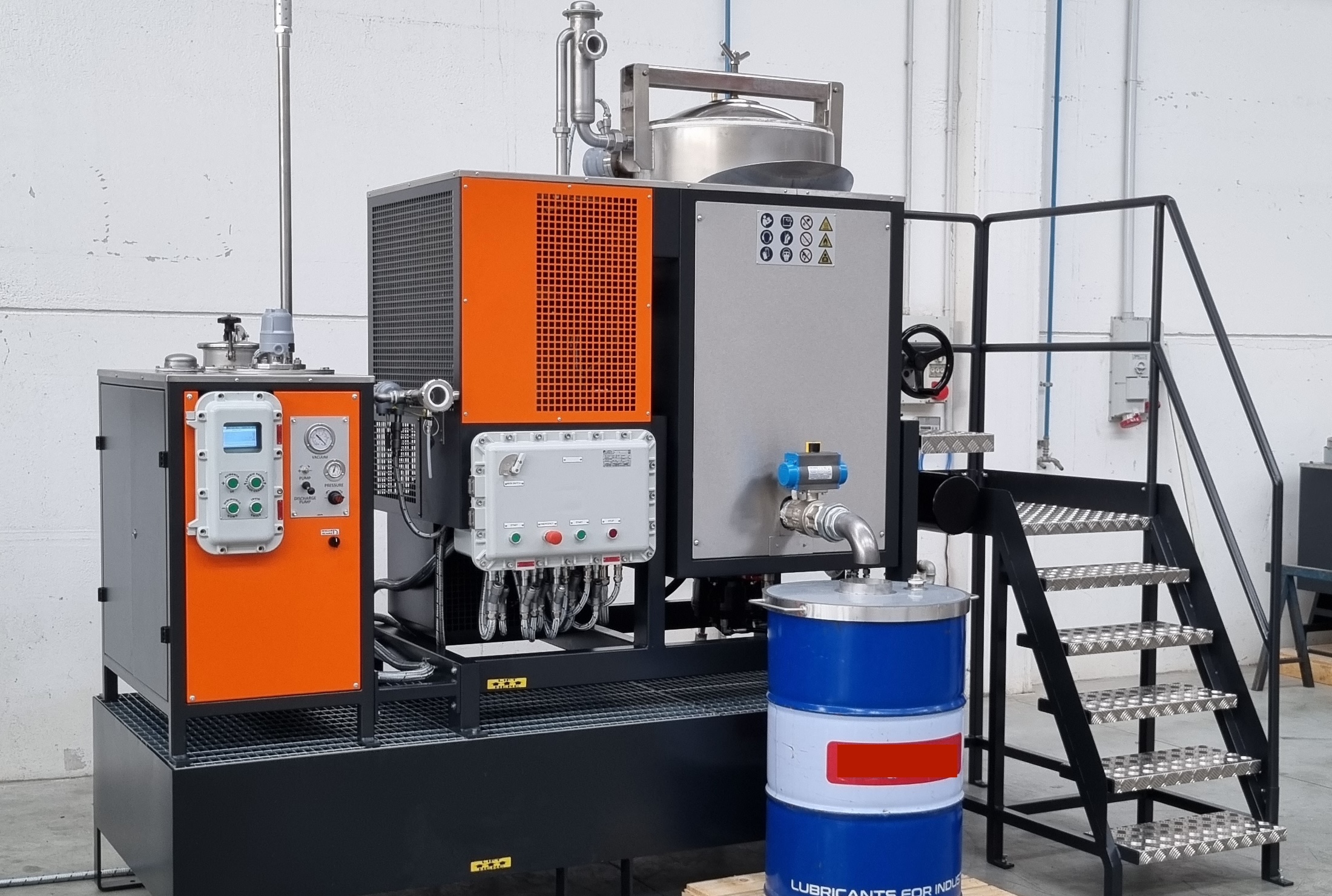
- compliant with ATEX regulations
- easily accessible for maintenance and loading/unloading
An incorrect position can hinder daily operations and increase the risk of dangerous vapour accumulation. The definition of a “hazardous zone” around the distiller is another crucial aspect.
Typically, a safety area of at least one metre around the machine is considered, within which all equipment and procedures must strictly comply with ATEX regulations.
2. What problems do incorrect electrical connections cause on a solvent distiller?
I collegamenti elettrici e pneumatici devono rispettare rigorosamente le specifiche tecniche del Electrical and pneumatic connections must strictly comply with the manufacturer’s technical specifications.
Common mistakes include:
- non-compliant voltage
- missing or inadequate grounding
- use of incorrectly sized lines.
These issues can cause malfunctions, machine shutdowns or, in the worst cases, hazardous situations.
3. How should the waste discharge of a solvent distiller be managed?
The distiller does not only produce regenerated solvent: it also generates residues (sludge) that must be managed safely. Therefore, another aspect to consider is the type of residue discharge system to adopt based on the product to be treated. An automatic discharge system can be used, where the machine discharges autonomously at the end of the cycle through the discharge valve, or for certain special applications such as composite materials and solid residues, a manual discharge with boiler tilting is preferred.
An inadequate discharge system can:
- slow down the production cycle
- increase downtime
- expose the operator to unnecessary risks.
It is essential to provide closed and safe systems, designed to facilitate disposal.
4. Why is it important to analyse the solvent before installation?
Every solvent has different chemical-physical characteristics. Installing a system without having analysed the actual solvent used in the process is a strategic mistake.
Without preliminary tests, you risk:
- obtaining recovery yields lower than expected
- setting non-optimal working parameters
- compromising the quality of the regenerated solvent.
5. Why is operator training essential for distiller efficiency?
Even the best system can become inefficient if used incorrectly.
The lack of training for dedicated operators leads to:
- improper use of cycles (temperature and timing)
- errors in managing solvent loading and residue discharge
- neglected maintenance.
A trained operator, on the other hand, is an integral part of the system’s efficiency.
Best practices for an effective installation
To avoid critical issues and ensure consistent performance over time, it is important to follow some fundamental guidelines:
- Rely on the manufacturer for defining installation specifications
- Check spaces and environmental conditions before the system is delivered
- Carry out tests preliminary distillation tests on the actual solvent
- Ensure certified and safe electrical connections
- Provide an efficient and safe residue management system
- Properly train operators from the commissioning stage
Efficiency and safety start from the beginning
A solvent distiller is an investment that brings concrete benefits in terms of cost reduction and process optimization.
However, these results are only achieved when the system is correctly installed and used under ideal conditions. Avoiding the most common mistakes means protecting the investment over time, ensuring production continuity and a safe working environment.
In other words, it means turning good technology into a truly high-performing solution.
Are you planning the installation of a solvent distiller? Contact Ciemme’s technicians for a free consultation: we analyse your solvent, verify site conditions and guide you through every phase, from installation to operator training.