Solvent Distillation: What Can Go Wrong When the Process Is Not Under Control
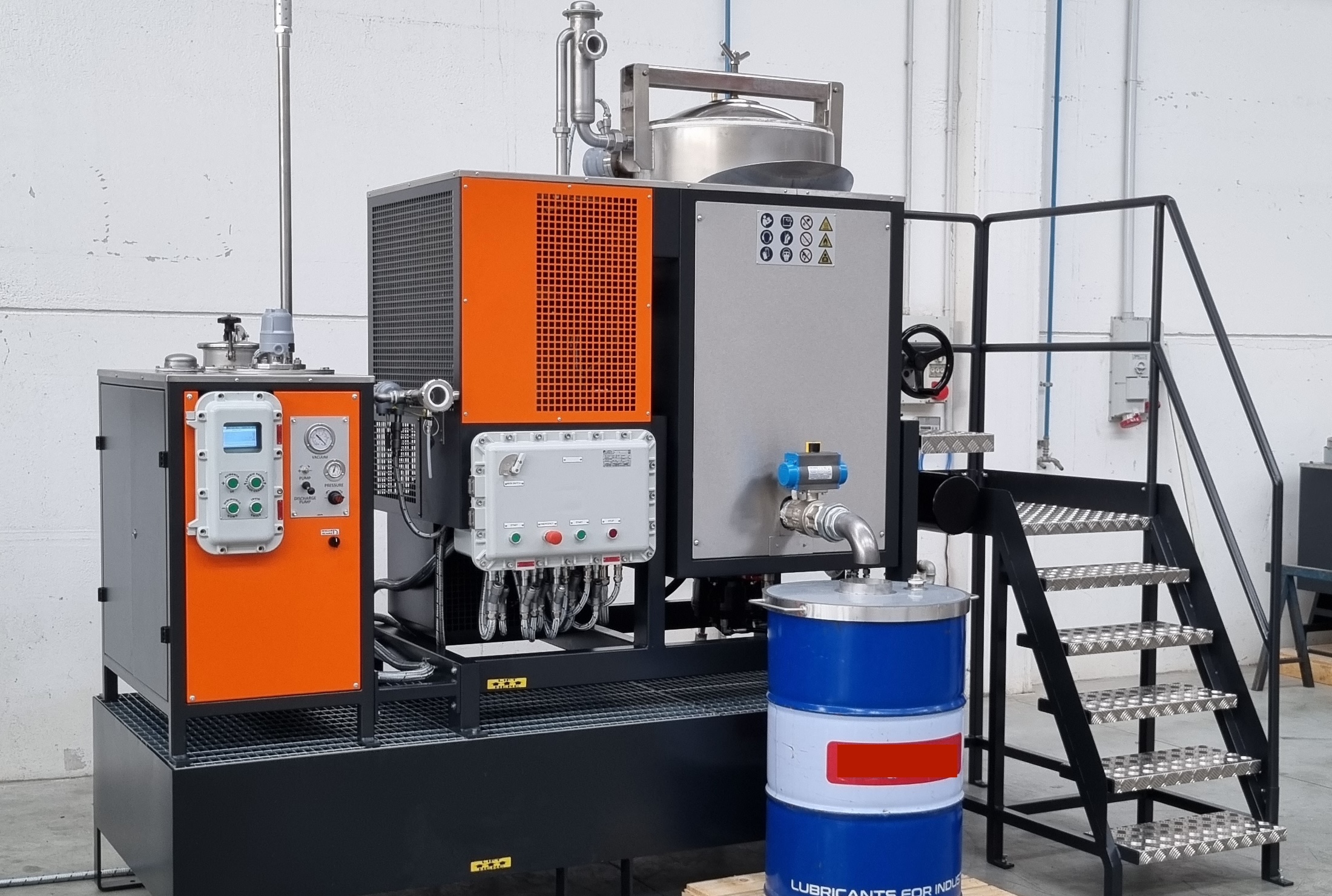
Solvent distillation: Why process control is essential for safety, regenerated solvent quality, production continuity and cost reduction.
Solvent distillation has become an essential technology for a wide range of industrial applications. From industrial printing and coating to chemical manufacturing and metalworking, recovering and regenerating solvents helps companies reduce operating costs, minimize waste, and improve the sustainability of their production processes.
However, distillation is much more than a simple evaporation process. Every solvent has specific chemical and physical properties that must be carefully managed. When the process is not properly controlled, solvent degradation, operational inefficiencies, contamination of the distilled solvent, and safety issues may occur.
For this reason, the quality of the regenerated solvent, production continuity, and workplace safety all depend on accurate control of every distillation parameter.
Every Solvent Behaves Differently
One of the most common mistakes is assuming that all solvents behave in the same way.
In reality, each solvent responds differently during the distillation process and requires specific operating conditions.
There are chlorinated solvents, alcohols, esters, hydrocarbon solvents, and many other categories, each with its own chemical and thermal characteristics.
Achieving an efficient and safe distillation process requires a thorough understanding of parameters such as:
- Temperature class
- Flash point
- Latent heat of vaporization
- Ignition temperature
- Auto-ignition temperature
- Solvent density
- Boiling point
- Vapor density
- Water solubility
- Solvent acidity (pH)
Even the boiling point alone can significantly influence the process.
A pure solvent evaporates at a specific and constant temperature, whereas solvent mixtures or contaminated solvents often require different temperatures and longer distillation cycles.
For this reason, the solvent Safety Data Sheet (SDS) should always be the starting point for selecting the correct distillation system configuration and defining the most suitable operating cycle.
The Hidden Risk: Chemical Changes During Distillation
During the distillation process, some solvents may undergo chemical changes that are not immediately visible.
One of the most common phenomena is solvent acidification. This may occur, for example, when contaminated solvent is stored improperly or for extended periods before distillation, promoting oxidation processes.
Temperature also plays a critical role. Some heat-sensitive solvents tend to degrade when exposed to excessive temperatures, reducing the quality of the regenerated solvent and decreasing the overall efficiency of the process.
Particular attention should be paid to halogenated solvents, including chlorinated and fluorinated solvents, which may develop acidic properties during processing.
In these cases, it is essential to use suitable components, such as stainless steel condensers, and adopt vacuum distillation technology to keep the process within controlled operating conditions.
Accurate temperature control not only preserves solvent quality but also improves system reliability, production continuity, and equipment lifespan.
Contaminants: The Solvent Is Not the Only Variable
When discussing solvent distillation, attention is often focused solely on the solvent itself.
In reality, the contaminants contained in the mixture have a direct impact on both process efficiency and operational safety.
Contaminants may be liquid, such as oils and inks, or solid, including resins, paints, polymers, adhesives, and pigments.
Their presence can significantly alter the behavior of the mixture during distillation.
In some cases, contaminants may be carried over into the distilled solvent, reducing its purity and making it unsuitable for reuse.
Different contaminants also require different distiller configurations.
Identifying the nature of the contaminants in advance makes it possible to optimize the distillation cycle and maximize the quality of the regenerated solvent.
For this reason, a proper analysis of the waste solvent is an essential step in designing an efficient distillation process.
Process Control Makes the Difference
The difference between simple evaporation and efficient solvent distillation lies in precise process control.
Continuously monitoring temperatures, vapors, and processing times makes it possible to adapt the operating cycle to the specific characteristics of the solvent mixture, improving both solvent quality and operational safety.
Among the most important technologies is vacuum distillation, which lowers the solvent’s boiling point and allows the process to operate under more controlled conditions.
Vacuum distillation facilitates evaporation, increases process efficiency, and reduces thermal stress on both the solvent and the contaminants.
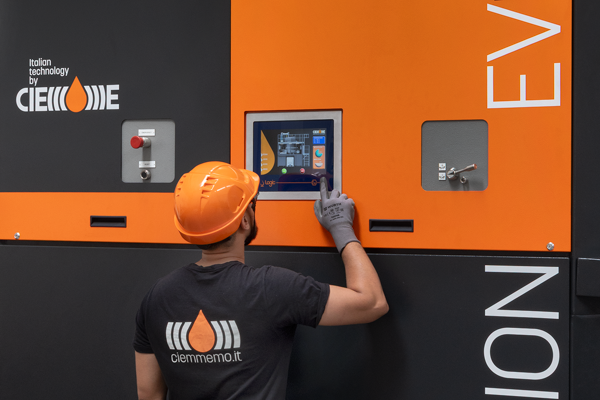
Automation also plays a key role.
Modern PLC control systems automatically manage:
- Contaminated solvent loading
- Level monitoring
- Temperature control
- Automatic residue discharge
- Alarm and safety system monitoring
These systems are complemented by integrated fire protection, redundant safety controls, and full ATEX compliance, all essential when handling flammable solvents in hazardous environments.
Automation and process control not only improve safety but also reduce manual intervention, minimize operator errors, and ensure continuous production.
A Controlled Process Also Means Greater Cost Savings
A properly designed distillation process delivers significant economic benefits in addition to its technical advantages.
Through solvent regeneration, it is possible to recover up to 90% of the solvent used in the production process.
This allows companies to:
- Significantly reduce the purchase of new solvent
- Lower waste disposal costs
- Minimize the storage of contaminated solvent
- Reduce exposure to fluctuations in raw material prices
Processing costs are also considerably lower than external disposal costs.
According to the analyses presented in the manual, solvent regeneration using a distillation system can cost up to 3 to 5 times less than traditional waste disposal solutions.
These economic advantages are accompanied by tangible environmental benefits, as reducing solvent waste also lowers the overall environmental impact of the production process.
Solvent distillation is a highly efficient process—but only when it is properly designed and carefully controlled.
Every solvent has unique characteristics, every contaminant can affect process performance, and every operating parameter contributes to the final quality of the regenerated solvent.
For this reason, safety, production continuity, efficiency, and sustainability all depend on selecting the right technologies and configuring the distillation system according to the actual production requirements.
Working with specialized partners and advanced solvent distillation systems means not only recovering valuable solvents but also optimizing the entire industrial process in a safer, more efficient, and more sustainable way.