Can your solvent be recovered?

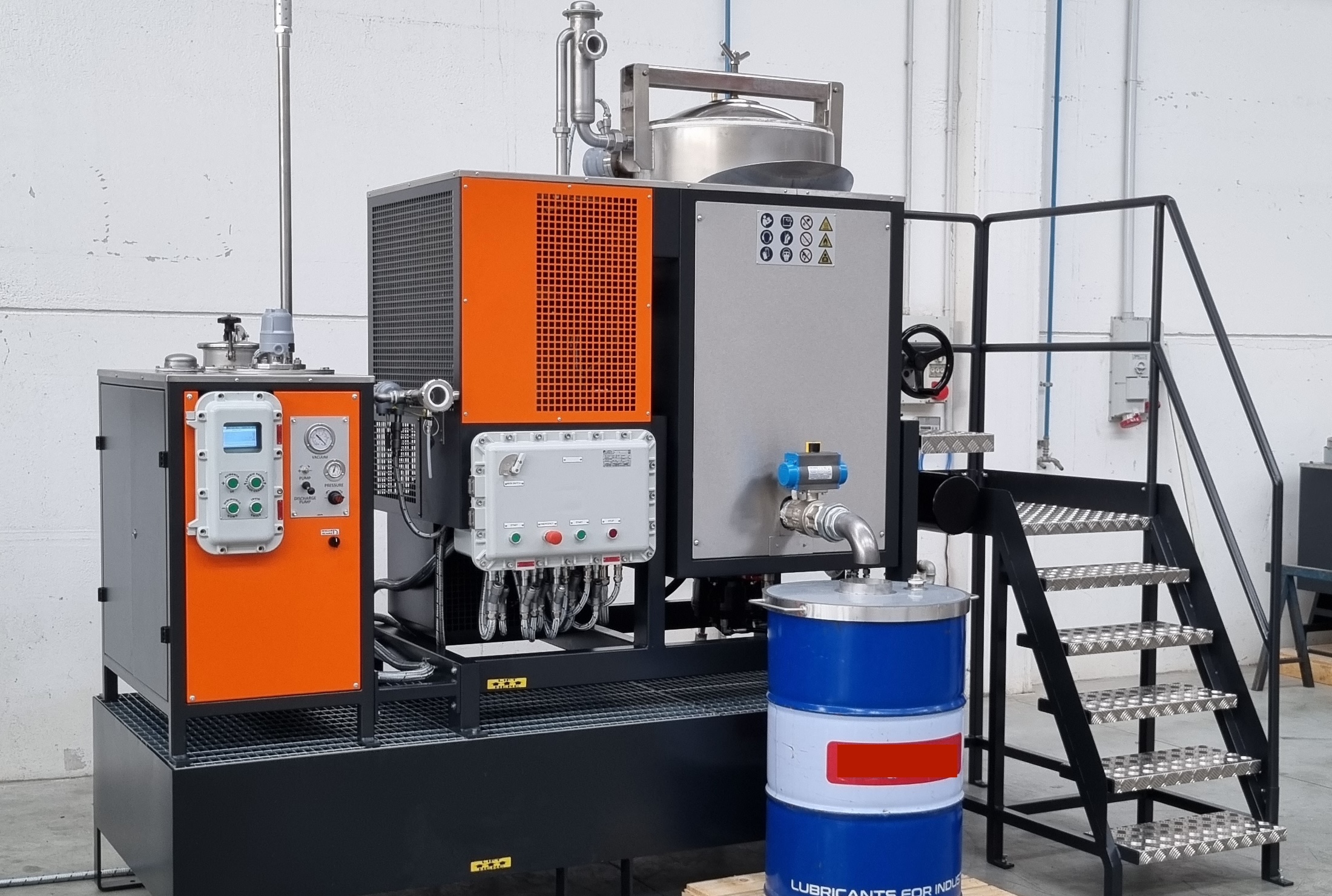
Most solvents used in industry can be regenerated through a distillation process.
How to determine if a solvent is recoverable through distillationon
Before proposing a plant, we always start from a concrete piece of data: the solvent to be treated.
Many companies that generate dirty solvent in their production cycle wonder whether it’s worth installing a distiller, but stop before even beginning the assessment because they don’t know how to establish whether their solvent is recoverable.
The good news is that most solvents used in industry — from hydrocarbons to esters, from alcohols to chlorinated solvents — can be regenerated through a distillation process. But to know this for certain, you need to start from the right information, and in some cases from a concrete test.
The basic information to gather first
Before even contacting a supplier, it’s useful to have some essential information clear about the solvent you wish to recover:
- type of solvent used (pure or mixture)
- contaminants present and their nature
- quantity of dirty solvent generated daily or weekly
- how it is used within the production process.
These elements already allow for an initial rough assessment. But the document that really makes the difference is another one.massima. Ma il documento che fa davvero la differenza è un altro.
The central role of the Safety Data Sheet (SDS)
The solvent’s Safety Data Sheet (SDS) is the essential starting point for any serious assessment.
It contains the chemical-physical parameters that determine whether, and how, a solvent can be safely distilled:
- boiling point, which indicates the distillation temperature required
- flash point and auto-ignition temperature, essential for avoiding risks during heating
- density of the solvent and its vapours, useful for separation and risk assessment
- water solubility, particularly relevant for halogenated solvents
- acidity (pH), which indicates the product’s corrosive potential.
Without this data, it is not possible to correctly configure a distiller, nor to safely establish whether the process is suitable for the solvent in question. For this reason, we always request the SDS before proposing the most suitable plant.
Pure solvent or mixture?
Another key element is understanding whether it is a pure solvent or a mixture of several solvents.
A pure solvent evaporates at a specific, constant temperature, making the distillation process easier to predict and configure.
A mixture (such as a thinner), on the other hand, evaporates over a broader temperature range, and requires a more careful configuration to correctly separate the components and obtain a quality final product.
Furthermore, a contaminated solvent tends to evaporate at a slightly higher temperature than the same pure solvent, depending on the type and degree of contamination present.
Which contaminants are present (and how much do they matter)?
Not all contaminants behave the same way during distillation, and this is where many “DIY” assessments risk being inaccurate.
Liquid contaminants such as oils and inks generally have a high boiling point and don’t create particular problems, but must still be declared.
Solid contaminants such as resins, pigments, paints, polymers, adhesives and powders require specific distiller configuration in order to be handled correctly.
Potentially hazardous substances, such as nitrocellulose, peroxides or heat-sensitive dyes, require more in-depth assessment and, in some cases, dedicated safety systems.
Knowing the precise nature of the contaminants is therefore just as essential as knowing the solvent itself.
Why the technical data sheet isn’t enough: the distillation test
Every spent solvent has different characteristics depending on the production process, the type of contamination and the percentage of residues present. For this reason, choosing a solution based only on the available documentation still means relying on estimates.
The distillation test exists precisely for this: to verify the solvent’s behaviour under real conditions and gather useful technical information for making the right choice.
Through the test, we can assess:
- solvent recovery yield
- quantity of final residue to be disposed of
- quality of the distillate obtained
- duration of the work cycle
- most suitable plant configuration.
This allows the plant to be correctly sized, the economic benefits to be estimated, and a genuinely sustainable process to be defined over time. Every effective project always starts from the data.
The fastest way to get an answer
Assessing all these parameters on your own can be complex, especially if you are not familiar with safety data sheets or with the chemical-physical characteristics of solvents. And in many cases, only a technical test can provide a truly reliable answer.
Send us your solvent’s SDS, and we’ll assess whether your solvent is recoverable and which plant will best meet your needs!